Are you dreaming about mornings on Smith Lake and easy dock access right outside your door? Buying a waterfront home in Crane Hill can be exciting, but it also comes with details that matter more than they do in a typical home purchase. If you understand the shoreline rules, water levels, access, and property records before you close, you can make a more confident decision. Let’s dive in.
Why Crane Hill waterfront buying is different
Crane Hill buyers are often shopping on or near Lewis Smith Lake, a large Alabama Power reservoir that stretches across Cullman, Walker, and Winston counties. According to Outdoor Alabama, Smith Lake covers about 21,200 acres and includes more than 500 miles of shoreline.
That scale creates a lot of opportunity, but it also means no two waterfront properties function exactly the same way. A home with a great view may have very different shoreline access, dock setup, and seasonal usability than another property just a short drive away.
Smith Lake water levels matter
One of the biggest things to understand is that lake frontage is not static. Alabama Power states that Smith Lake is a storage reservoir, and lake levels typically begin lowering on July 1 and continue through November 30, although drought conditions can affect that schedule.
For you as a buyer, that means the shoreline you see on one showing may not look the same later in the year. Dock access, steps to the water, and shoreline exposure can change seasonally, so it is smart to evaluate how the property functions during lower-water periods, not just at summer full pool.
Alabama Power’s Smith Lake guidelines list summer full pool at 510 feet MSL and the flood easement at 522 feet MSL. Those numbers help frame why elevation, shoreline slope, and dock placement deserve careful review before you buy.
Shoreline ownership and permits
A common mistake in waterfront buying is assuming the shoreline works like a backyard lot line. On Smith Lake, Alabama Power owns the pool properties and holds additional shoreline rights, which means shoreline work is handled through its permitting system.
That matters because work in the lakebed, flood easement, or control strip may require approval. Alabama Power also notes that the permit request form is only the beginning of the process, so you want to confirm not just that paperwork exists, but that it is complete and current.
Just as important, Alabama Power’s guidelines state that the permittee does not gain property rights that extend into the lake. In practical terms, a dock or shoreline structure may be allowed by permit, but that does not mean the homeowner owns the lake area beyond the lot.
What to verify about the dock and shoreline
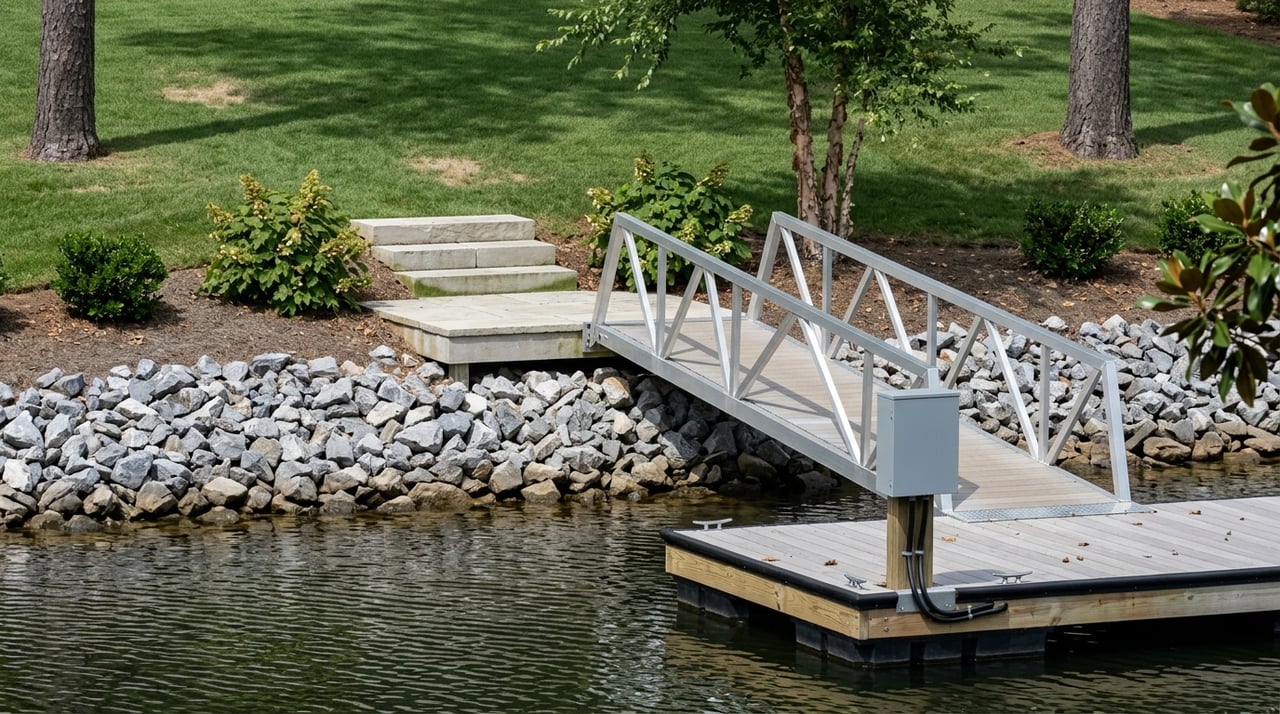
If a home has a dock, ramp, seawall, or other shoreline improvements, you should ask for the full shoreline permit file and compare it to the property as it exists today. Alabama Power’s buying and selling guidance says buyers should request the permit file from the seller or realtor, review the site against the approved plans, and verify that all shoreline improvements are listed.
A strong due-diligence review should confirm that the file includes:
- The signed shoreline guidelines
- The recorded deed
- A dimensioned drawing of the proposed work
- Any required subdivision ARC or HOA approvals
- Documentation showing listed shoreline improvements
You also want to make sure the actual site matches the approved plans. If a dock was expanded, a seawall was rebuilt, or utilities were added without proper approval, substantial repairs or modifications may require a new permit. Alabama Power warns that unauthorized construction may need to be removed or brought into compliance.
Know the structure limits
If you are considering future upgrades, it helps to know the basic shoreline rules before you fall in love with a vision that may not be allowed. Alabama Power’s current Smith Lake guidelines identify ordinary maximum sizes for residential shoreline structures at 1,444 square feet total and 92 feet in length.
The same guidelines state that covered structures must remain open and cannot be enclosed. They also may not include habitable fixtures like toilets or showers. If your plans involve changing a dock or adding covered space, these limits are worth reviewing early.
HOA rules can still affect the property
Even if a shoreline improvement appears acceptable through Alabama Power, community rules may still apply. Alabama Power states that permittees remain responsible for subdivision covenants, ordinances, health and sanitation regulations, and building codes.
That means a project could meet shoreline requirements but still run into issues under neighborhood restrictions. If the home is in a subdivision, recorded covenants, ARC approvals, and any community-use restrictions should all be part of your review.
Utilities and access need a closer look
Crane Hill is a rural lake market, so it is important not to assume the property has the same utility setup you might expect in a more urban area. Service details can vary from one home or lot to the next, especially with waterfront and wooded properties.
Cullman Electric Cooperative describes itself as the local electric cooperative serving rural homes and farms in Cullman County. That makes it one of the practical service points you may need to verify during your due diligence.
Access also deserves close attention. A home can have beautiful water views but still present challenges with driveway approach, parking, stairs to the dock, or lot shape. The Cullman County Revenue Commission’s GIS and property search tools can help you check owner name, parcel number, deed references, boundaries, and related parcel data.
Septic is a major waterfront issue
For many Crane Hill waterfront homes, septic review is not optional. It is a key part of understanding whether a property is ready for normal use and whether past work was handled properly.
Alabama Power states that septic systems must be approved by the proper authorities before permit issuance and before construction begins. The Alabama Department of Public Health also says no one may install or repair an onsite sewage system without a valid permit from the local health department, and a building may not be occupied unless it has an approved sewage disposal system.
ADPH’s homeowner guidance adds that approval for use comes from the county health department. It also recommends that homeowners keep maintenance records and have septic tanks inspected and pumped regularly by a licensed contractor.
For you as a buyer, this means asking for septic approval-for-use documentation and maintenance records whenever possible. If records are limited, bringing in a licensed septic contractor before closing can help you better understand condition and risk.
Focus your inspection on waterfront realities
A standard home inspection is important, but a waterfront property usually needs a more targeted review. The goal is to confirm both the house and the shoreline improvements match the paper trail.
On the shoreline side, pay special attention to the dock, gangway, steps, retaining features, and seawall condition. Alabama Power notes that riprap may be required for new or reconstructed seawalls, and dredging is reviewed case by case, so shoreline changes are not always simple or automatic.
You should also evaluate whether the slope and shoreline stability support the way you plan to use the property. A steep lot, limited water depth, or low-water access challenge may not be a dealbreaker, but it should be understood clearly before closing.
The right professionals can protect you
The most useful waterfront buying team in Crane Hill often includes more than a general inspector. Based on the research, the strongest support group may include:
- A waterfront-focused inspector
- A surveyor or title professional who can interpret deed and GIS records
- A licensed septic contractor
- Alabama Power’s Smith Lake shoreline office
Alabama Power lists its Smith Lake shoreline office at 205-384-7385 for permitting and lake-level information. When questions come up about a dock, permit history, or shoreline compliance, getting clarity before closing is much easier than trying to fix surprises after you own the property.
A smart pre-closing checklist
If you want a more confident Crane Hill waterfront purchase, gather the core documents before closing and compare them carefully to what you see on site. A practical checklist includes:
- Shoreline permit file
- Recorded deed
- Parcel map or survey
- Site photos
- HOA or ARC approvals, if applicable
- Septic approval-for-use records
- Septic maintenance records
This process may feel detailed, but it is often what separates a smooth waterfront purchase from an expensive learning experience. On Smith Lake, the best decisions usually come from patient review, clear documentation, and early problem-solving.
If you are considering a waterfront home in Crane Hill, having a calm, detail-focused guide can make the process much easier. For strategic help evaluating Smith Lake properties, dock paperwork, and key due-diligence questions, connect with Laurne Rhodes.
FAQs
What should you check before buying a waterfront home in Crane Hill?
- Review the shoreline permit file, recorded deed, parcel map or survey, site photos, septic records, and any HOA or ARC approvals, then compare those documents to the property as it exists today.
Why do Smith Lake water levels matter for Crane Hill buyers?
- Alabama Power lowers Smith Lake seasonally, typically from July 1 through November 30, so dock usability, shoreline exposure, and water access can look different depending on when you visit.
Do docks on Smith Lake need permits in Crane Hill?
- Yes, shoreline work may require Alabama Power approval, and buyers should verify that docks, ramps, seawalls, land-based structures, and utilities are properly listed in the permit file.
What septic questions should Crane Hill waterfront buyers ask?
- Ask whether the property has county-approved septic documentation, approval for use, and maintenance records, and consider a licensed septic inspection before closing.
Can HOA rules affect a waterfront property in Crane Hill?
- Yes, subdivision covenants and ARC requirements can still apply even if a shoreline improvement appears acceptable under Alabama Power guidelines.